
It’s no secret that we live in a screen-focused society. Smartphones, tablets, laptops, televisions, and even some advertisements such as those found in shopping centres all use display technology. Everyone is likely to encounter some form of display each day.
Our daily exposure to screens means we often take this technology for granted, but they do not all use the same components; rather, different types of display technologies are used depending on the purpose of the display. There are a wide variety of electronic display technologies available today. These range from the somewhat antiquated but very capable Plasma HD Displays to the most advanced display technology on the market today… OLED TVs. Here’s an introduction to the different types of display technology.
1. LCDs (Liquid Crystal Display) and LEDs (Light Emitting Diodes) :
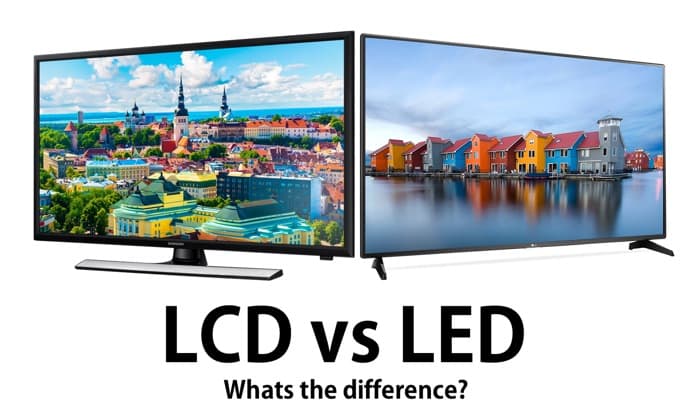
LCDs are often used for television screens and computer monitors. The main thing to understand about LCD panels is that they all use a white backlight. They work by shining a bright white light into your eyes, while the rest of the panel is for changing this backlight into individual pixels. They are made from several layers; a layer of the liquid crystal is pressed between a sheet of glass substrate formed with transparent pixel electrodes and TFTs (thin-film transistors) and a sheet of the substrate with a colour filter and transparent counter electrodes. LCD technology doesn’t emit light, rather it blocks light to create a picture on the screen, so they need a source of backlighting.
LED stands for light-emitting diode. LED is just a different type of backlight compared to the old cold cathode backlights. Because LED technology is now superior in terms of brightness output, compactness, and energy efficiency, modern LCD screens use LEDs for their backlighting.
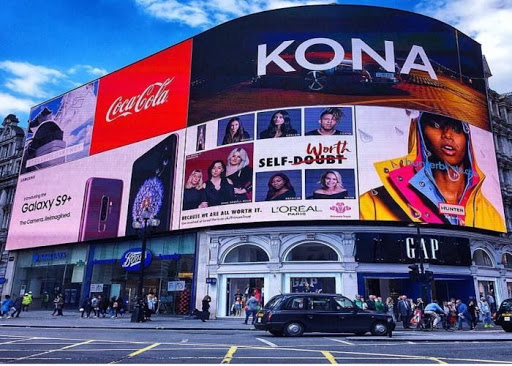
LED screens can be used for any kind of display, such as signs or any outdoor screens. They will use less energy to operate, while still being extremely bright and retaining a high picture quality and clarity. Large display screens such as those found in Times Square and Stadiums use LED displays because they do not get washed out by ambient light. Because of the panel makeup of LED displays, the size of screens can be increased without compromising on picture quality.
2. OLED (Organic Light Emitting-Diode) and AMOLED (Active-Matrix Organic Light-Emitting Diode) : Blackest Blacks and Vibrant Colors
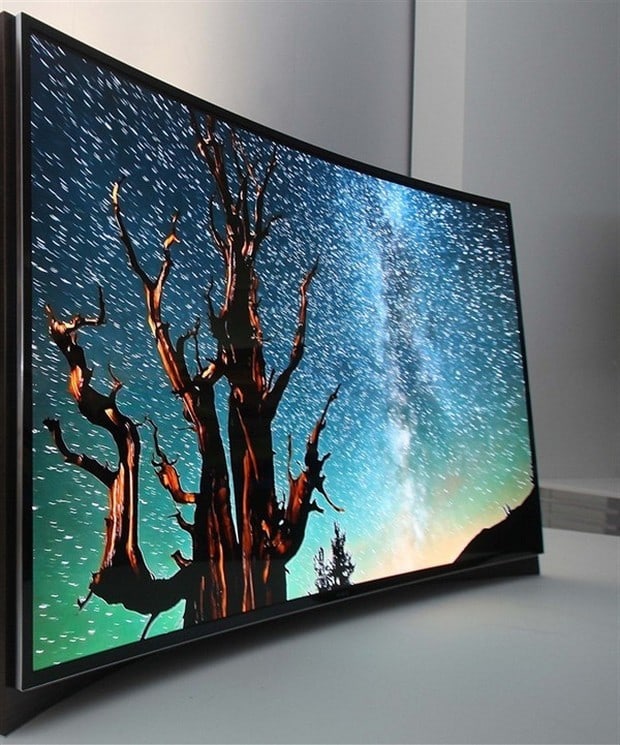
OLEDs are the next generation of technology to be used in place of LCD and regular LED displays. AMOLEDs are even more advanced, using active-matrix technology to provide a superior picture – these are used in smartphone displays.
OLED panels are different from LCDs. There are no polarization tricks here. Instead, each pixel (or subpixel of red, green, or blue) lights itself up as a voltage is applied to a giant complex molecule called, yep, an organic light-emitting diode. The colour emitted is dependent on the molecule in question, and brightness is dependent on the voltage applied. OLEDs can reach HDR brightness because their molecules put out the right colors, to begin with without being blocked.
Pros
Due to its approach to color and brightness, OLEDs have great contrast ratios. There’s no need to block a backlight, so there are no worries about light bleeding through. Blacks are very black, and colors look great. They can also use a trick called rolling scan. This turns blocks of the screen on and off one at a time, from top to bottom in a roll. This is all done as the image is sent to the screen, which cuts down on persistence blur a lot. This is why every major VR headset that can afford it uses OLED panels today.
OLEDs can even be flexible, so look for them to show up in tomorrow’s promised bendable and foldable phones and tablets.
Cons
Unfortunately, that’s where the advantages of OLED end. Refresh rates of OLED panels have never surpassed about 90Hz. And they’re quite expensive. A large part of that $1,000 iPhone X1 Pro price is due to its OLED display. The current molecules used in OLEDs also degrade relatively quickly over time, especially those used for the color blue, making the screen less and less bright.
So OLEDs, while once promising and seemingly the future, have yet to live up to that promise.
3. QLED (Quantum dot Light Emitting Diode) : Advanced LEDs :
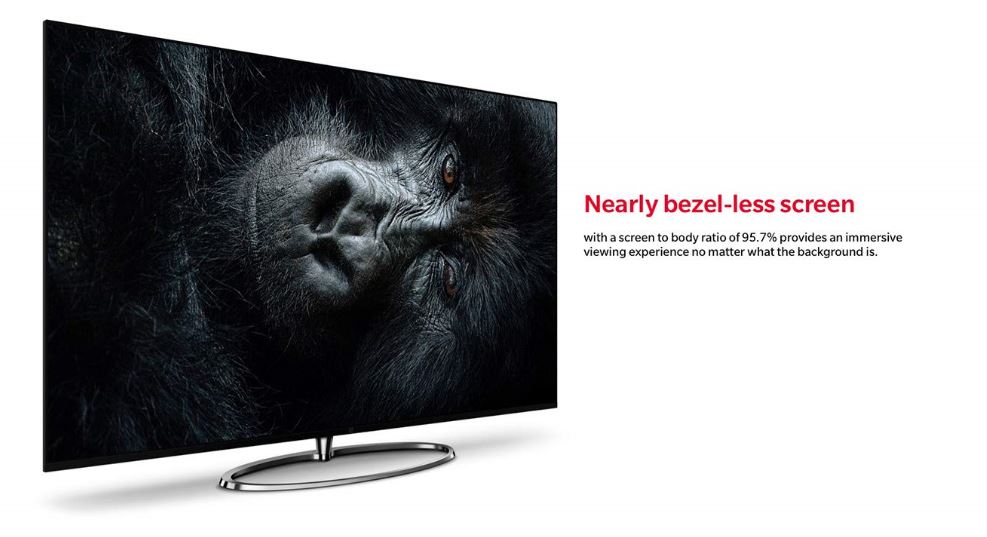
How do LCD panels go about reaching HDR brightness when incorrect polarization and color filters block so much light? The answer is quantum dots. These clever little things are molecules that absorb light and then re-emit that light in the color you engineered them to.
Today’s quantum dot layers usually go between a blue backlight and the polarization step, and are often used to produce red and green that more closely matches the color filters, so more light passes through them. This allows more of the backlight to come through instead of being blocked by the color filters, it can also reduce crosstalk, or colors slipping through the wrong subpixel, ensuring better colors of LCDs.
Other uses of quantum dots are being tried, however. One promising one is using QD molecules to replace the color filters entirely, allowing even more light through. Because LCD backlights produce more light than OLED panels (more on those below), this would allow LCDs to become the brightest displays around.
Currently, QLEDs can produce the highest level of brightness, the largest colour palette, and the purest whites.
While the quantum dot filter technology is new to the world of screens, this type of display is an advancement on existing LED/LCD tech, and still requires the use of backlighting. Therefore, the main competitor for QLED is OLED, which produces its own light.
4. MicroLEDs: The Future?
A relevant question: If our fastest gaming displays are 240Hz IPS panels now, just how fast do we need to go anyway? Well, a 2015 study places maximum human perception at 500Hz. So from that perspective, we’re halfway there. But that’s halfway there with today’s HDR, and not in lightfield 3D, or other possible advancements. And mobile devices could always use displays that take up less power.
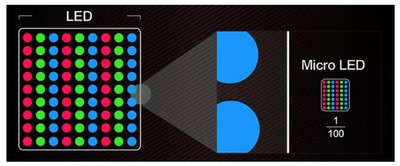
In other words, in order to get fancy 3D effects, or much higher brightness, or any other desirable features, a different, new type of panel may be required. MicroLED tech is one such technology; think of it as OLED without the organic part and with the potential to improve contrast, response times and energy usage over standard LED panels.
Samsung, LG and Apple are currently researching MicroLEDs, but only time will tell if it becomes a popular standard.

There are a lot of bold claims about what type of display gives the ‘best picture quality’ but a lot of it depends on what you are manufacturing and the requirement of the consumer. Hopefully, this introduction to the types of display technology has been useful in understanding the differences.
Ciaó
Cogitare Et Credere
Co-Authored By-
Vyom Goel
B.Tech Computer Science & Engineering
IIT Mandi
Codeforces Expert & Tech Enthusiast
 TᗯIᑎ ᖇEᗩᒪITY