

What is this and why? Suppose you are a developer of such app that has to have a centralised system for all the installed platforms in the world. So what are you gonna do? Of course, start a server on your PC for that particular centralised task right? but you cannot host the server for eternity on your PC because as soon as your PC is shut off the server will be no longer in life and your users are gonna suffer and you don’t want this. At this stage, you want to have a just a CPU to host it, so this is what a basic cloud provider does, it gives you some space or functionality on his machine to run your task by charging you money so you don’t have to run it on your machine. Also, a high-performance cloud (HPC)(We will see it more detail further) processor does 10^15 cals/s compared to our PC’s 10^9 cals/s so it is a bit faster too 😉
So let’s start again.
“Cloud is about how you do computing, not where you do computing.”
Paul Maritz,
Introduction to Cloud Computing
Putting simply, The delivery of various computing services such as databases, storage, servers, software, etc. remotely via internet to offer faster innovation, flexible resources, and economies of scale are known as Cloud Computing.
There are a total of four types of cloud services.
Types of Services
PaaS (Platform as a Service)
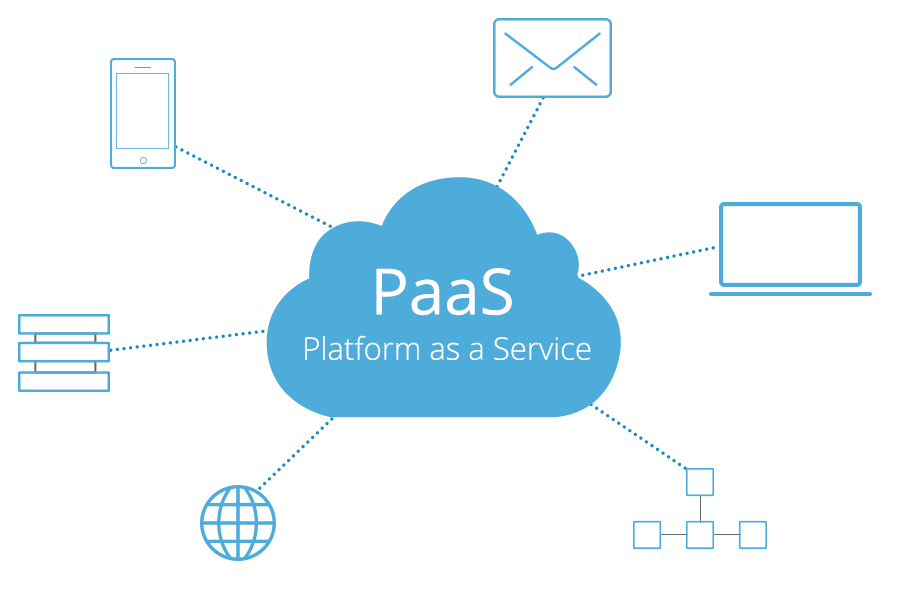
A PaaS service is a service that delivers development platform to firms for example storage, Operating Systems, Virtual servers, middlewares, etc.
This type of service enables firms to run and develop a software system without having the trouble to install and maintain a developer platform.
IaaS (Infrastructure as a Service)
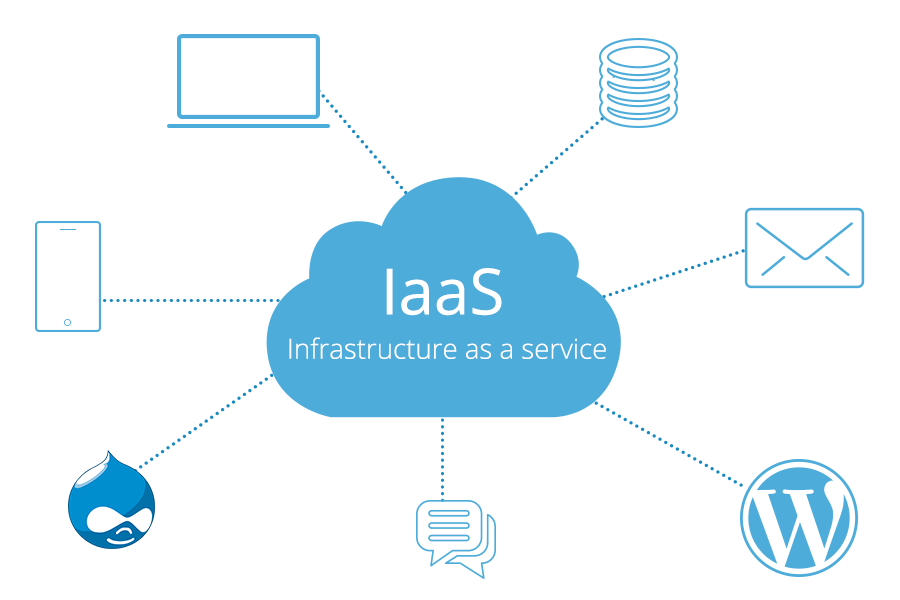
It provides a basic layer of computing which resembles a typical outsourcing model.
This includes outsourcing infrastructure, hosting services, database services, networking and storage services.
It provides a true single environment for all development and test efforts and uses virtualisation to maintain consistency.
FaaS (Function as a Service)
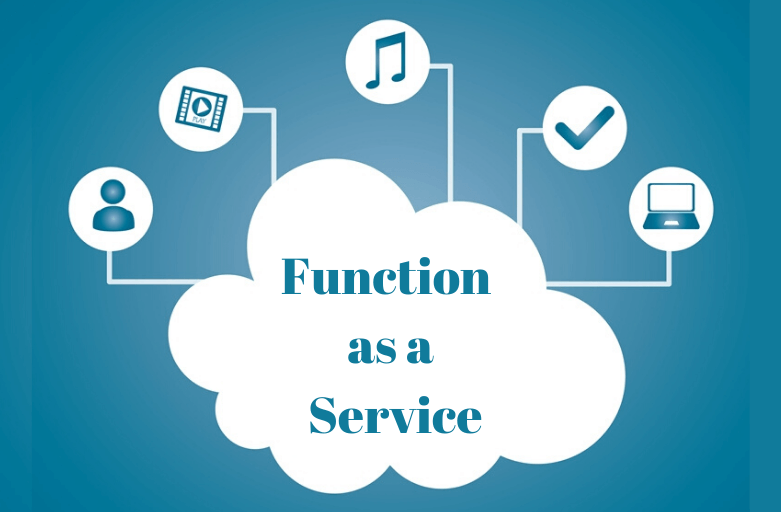
It is quite similar to PaaS. It provides an app development environment in the form of microservices.
But it differs from PaaS that it provides computing on demand dynamically i.e. firms only pay for the time that environment is used.
It is offered as runtime services. It processes data but doesn’t store data.
Serverless computing is an extension of FaaS. Examples: Azure functions, AWS Lambda, Google Functions
SaaS (Software as a Service)
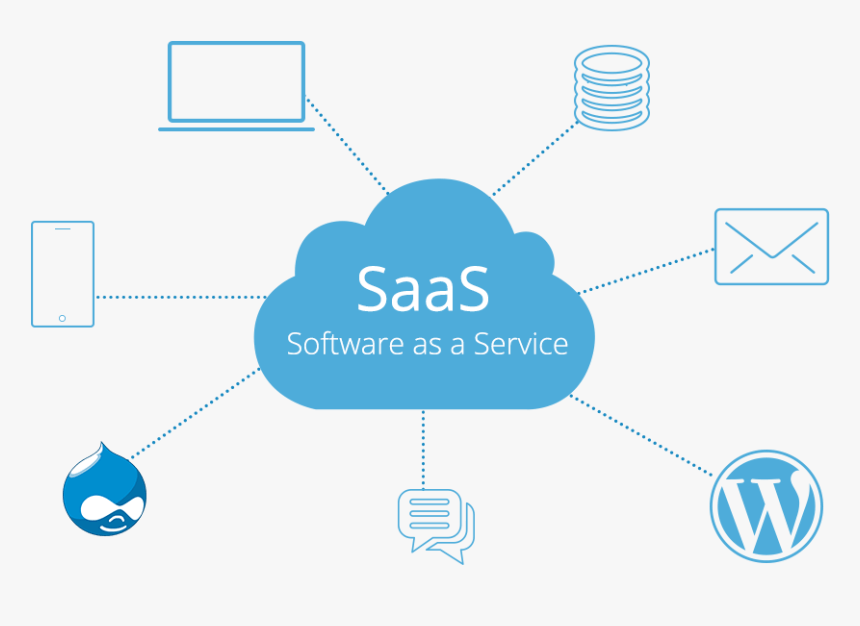
It is hosted by 3rd parties and made available to the user over internet connection.
It is a method to deliver a product based on the subscription model.
Firms are only charged for each user that needs the software product.
Example: Google docs
So far we have learned about types of services. Now we will see the types of deployment methods cloud provider provides.
Deployment Models
Private Model
A cloud computing deployment model where firm controls or owns the data centre providing the cloud services.
It does not use the internet, cloud services are delivered on the firm’s network.
Ther are further two types of private models:
Physical
- The firm has the physical custody of the data centre where the cloud is hosted.
Virtual Private Cloud (VPC)
- A set of computing resources for a specific customer is dedicated.
- It uses a VPN approach to deliver cloud services over the firm’s network.VPN allows firms to extend their network to outside data centres using internet connections.
- Every well-known cloud provider like GCP, Azure, AWS, IBM provides VPCs.
This was all about private deployment models lets see the public model
Public Model
The firm uses the services of a 3rd Party, data centres are in a seismically stable location.
Public model services are allowed over the internet and generally available to all.
Hybrid Model
It is a combination of both private and public cloud.
Private part consists of commercial hardware that has hypervisors installed to manage the private cloud services.
For using managing key data.
Used for IaaS and provides services like computing and networking.
High-Performance Computing
It is actually an architecture of arrayed computers or processors, running together in a cluster(a group of computers running and acting together)
Components of HPC
- Computing
- Data storage
- Networking
Cloud computing is an ideal model for HPC.
Hosting Scenarios
Virtualisation and cloud allows the enterprise to manage hardware like software
Virtual Machine (VM)
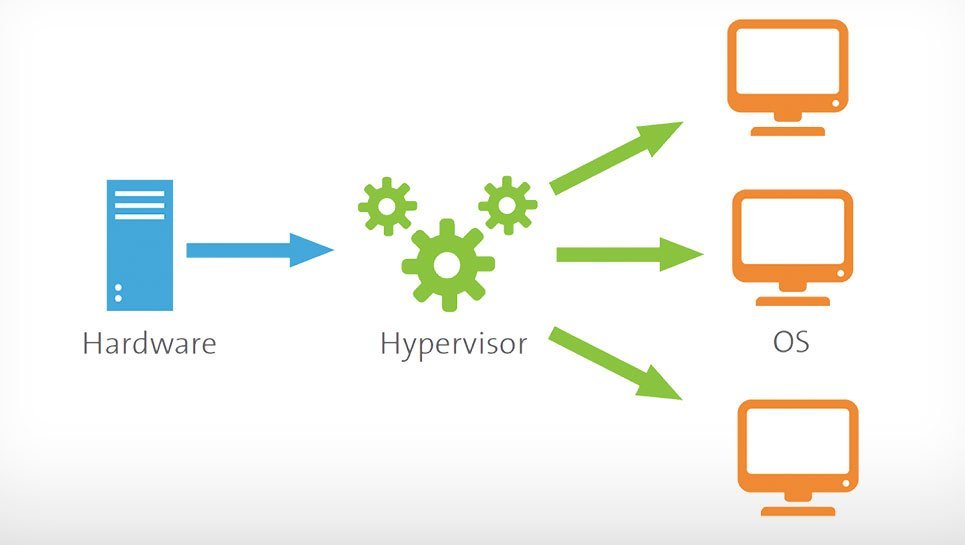
- The hypervisor is an Operating System which manages access to the physical hardware for each Virtual Machine.
- Administrations make virtual templates of VM images and accelerate their development.
- Virtualisation and cloud provide virtual network adapter to allow VMs to communicate identically to all machines.
Docker
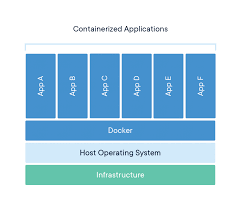
- It is a PaaS.
- Docker provides virtualised Operating System environments called containers.
- The containers do not run on their own, they run on a single operating system called the docker engine.
- The containers are dependent on the single OS kernel. If you wanna run a container which requires a different type of kernel use virtual machine of that OS and starts docker container inside that VM.
Kubernetes
- It is a PaaS.
- It can also be offered as IaaS.
- It automates application deployment, scaling and maintenance.
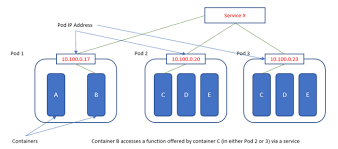
- Kubernetes architecture is based on a structure called Pods.
- Pod houses containers are similar to docker. Each is independent and has its own IP address.
- A Kubernetes service (X in figure) is a set of pods that work together within a Kubernetes cluster.
Further blogs are on On-premises Computing and Decentralised Distributed Apps (DApps) so stay tuned 🙂
Ciao.
Cogitare Et Credere
Co-authored by-
Shubham Pandey
B.Tech IIT Mandi
 TᗯIᑎ ᖇEᗩᒪITY