
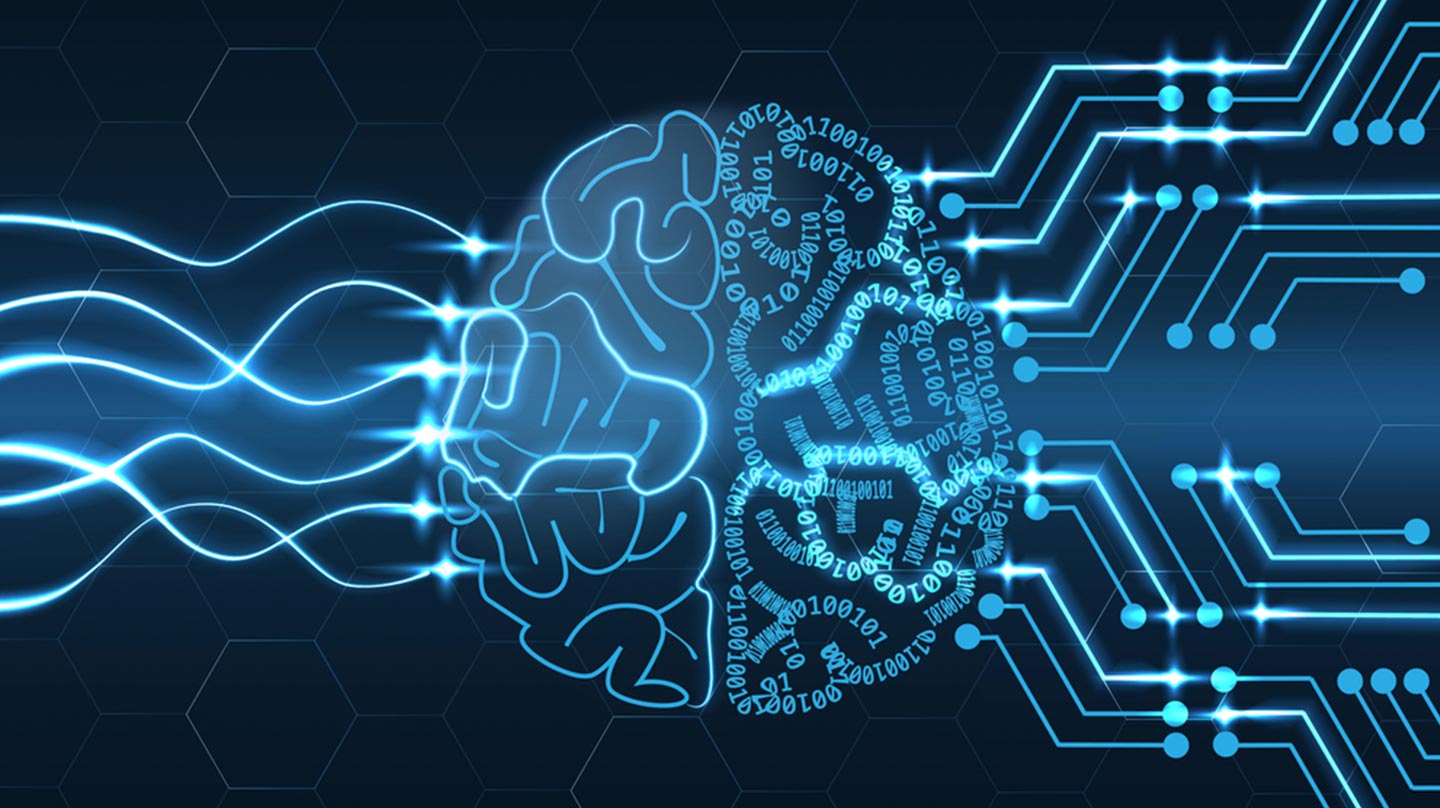
In today’s world, Artificial Intelligence is at its peak. Worldwide revenue from the AI market is projected to reach as high as 97.9 billion U.S. dollars by 2023. It is one of the most promising and demanding fields in computer science presently. But Why Artificial Intelligence is so popular and successful today? Is it a new concept which people didn’t think about in past?
The fact is Artificial intelligence is not a new concept but is a very old one. Artificial Intelligence is a field of computer science which artificilate or mimics the human intelligence. It speeds up the work of human intelligence.
“Success in creating AI would be the biggest event in human history. Unfortunately, it might also be the last, unless we learn how to avoid the risks.”
Stephen Hawking
So, looking back in history the first known case of A.I. seems to be the Difference Engine designed by Charles Babbage. It was also a kind of A.I. which solves mathematical equation. Then came Ada Lovelace who designed first computer program which is also a kind of A.I. But why A.I. is so advance today ? The main reason among many is DATA and compute power. Data plays a big role in artificial intelligence. If we look into the philosophy of artificial intelligence, of how it works? We will get the answer.
For the answer, first we have to understand how human intelligence works? How does our brain work, how we think, see, process things?
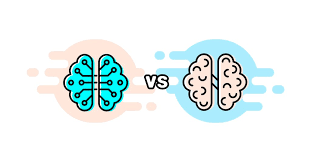
The answer is by Learning. Let us decode working of brain in more details-
- How do we see things and recognise what they are ?
– If you look around, you will see a lot of objects. You encounter many different objects every day, and you recognise them almost instantaneously without any effort. When you see a chair, you don’t wait for a few minutes before realising that it is in fact a chair. You just know that it’s a chair right away. We, humans have a very complicated structured brain with a complex network of neurons. We still have not completely understand how it works completely but we have some knowledge.
Humans can recognise different objects effortlessly, and can cluster similar objects together. We can do this because we have developed some sort of invariance toward objects of the same class. When we look at an object, our brain extracts the salient points in such a way that factors such as orientation, size, perspective, and illumination don’t matter. Our network is very well trained on these features that it takes almost no time to recognise. Our brain have been trained since the time of prehistoric era and it has achieved perfection.
Let us imagine a new born baby. How does she recognise a chair when she encounters it for the first time?
Her parents tells (trains) her so. She might not recognise (loss function) it even after learning it for the first time but she sees it regularly and trained about it regularly and the rest of the work of extracting salient features is done by our well-developed brain, which is a kind of pre-trained model ( what is this? ). Well, this is the role and power of data and finding patterns.
What if a baby from a birth has seen sneakers only as shoes and encounters brogue shoes for the first time? Would she classify it as shoes or not
2. How do we understand language?
-Again by learning. We were taught and moreover we listen it every time (data) which makes our neurons to learn and adapt more faster towards it. We can convert one language to other if we know both languages and understand the semantics.
So, We need Data to find and understand human intelligence and to replicate how humans do it.
In today’s era, due to the advancement of technology we are able to achieve state of art methods to replicate at same level if not better than human intelligence. We have lot of data available and lot of machine power to process this much amount of data. As of 2017, Data is most important and valuable commodity in the world.
“Information is the oil of the 21st century, and analytics is the combustion engine.”
Peter Sondergaard
The main thing about human intelligence is its vision and language processing. So , artificial intelligence targets two things –
1. Computer Vision 2. Natural Language Processing
- Computer Vision – Computer vision is an interdisciplinary scientific field that deals with how computers can gain high-level understanding from digital images or videos. From the perspective of engineering, it seeks to understand and automate tasks that the human visual system can do.
- Natural Language Processing – Natural language processing is a subfield of linguistics, computer science, information engineering, and artificial intelligence concerned with the interactions between computers and human languages, in particular how to program computers to process and analyse large amounts of natural language data.
So, enough about what, now how? How do we do it?
Let us imagine machines as a new born baby with zero-developed brain to whom we have to teach the task of primarily vision and natural language understanding. We have a lot of things to deal with –
- Machines as we know can only understand 0 and 1 i.e. only numbers, how can they understand images and text?
- How to extract information from data?
- How much computational power is needed for this ?
- Even if it may sounds easy, how to implement it?
We will answer all these questions and learn about details of both computer vision and NLP and its implementation in one of the most popular frameworks Tensorflow in the upcoming blogs.
We will also look why it was not successful before and why it is so hot topic nowadays.
Ciao.
Cogitare Et Credere
 TᗯIᑎ ᖇEᗩᒪITY